Audi Q7 review - Engine, gearbox and technical highlights
Better to drive and plenty of tech, but still behind rivals

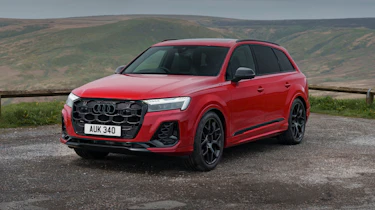
The four-cylinder petrol has been dropped from the range, with all but the top-end SQ7 powered by either TFSI or TDI turbocharged V6 engines. The entry-level 45 TDI has 228bhp and 402lb ft, while the 50 TDI, the choice of the two, has a sturdier 282bhp and and 442lb ft. The 3-litre twin-turbo petrol V6 engine delivers 335bhp and 369lb ft.
The plug-in hybrid models combine the petrol V6 engine with an electric motor on the transmission for a combined 389bhp and torque to match the punchiest diesel, at 442lb ft. All send power to all four wheels via an eight-speed
Saving weight was a big priority for Audi with the second-generation Q7, with a substantial 325kg trimmed compared to the first-generation car. At launch in 2015, the base Q7 weighed 1995kg. With increasing sophistication and tech appointments, not to mention regulation-related weight gain, the base Q7 has now crept over 2100kg.
Other technical highlights included optional four-wheel steering. Not too dissimilar to the system fitted to Porsche’s 911, the four-wheel steering technology shortens the wheelbase at low speeds by allowing the rear wheels to steer in the opposite direction to the front wheels, while at high speed the rear wheels steer in the same direction as the fronts to ‘increase’ the wheelbase length and improve high-speed stability.
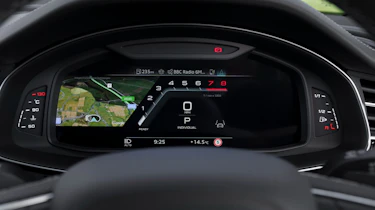
The Q7 was the first to receive Audi’s virtual cockpit driver’s display, which on its debut in 2015 was quite a novel thing. Now almost all cars in the premium space – certainly all the Q7’s keenest rivals – feature a digital display. The Q7 is for now a generation behind in terms of Audi’s MMI and climate system, using the similar stacked-screen setup as in the outgoing Audi RS6 and RS7. No doubt, the next Q7 will feature something akin to the latest curved multi-screen setup as seen in the latest S5, A6 and Q6 e-tron.
The Q7 also retains the ‘last-generation’ steering wheel, which means it retains tactile individual physical buttons and rollers rather than backlit panels. Steering wheel mounted paddles come as standard and although the transmission does a fine job of shuffling ratios without any human intervention, we found ourselves using the paddles more than expected.