Jaguar F-type facelift (2020 - 2024) review – the Jag we’ll miss the most
Jaguar’s last sports coupe is a modern-day icon. Fresh in the memory though it is, it’s sorely missed by enthusiasts
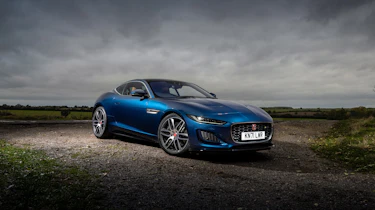
The F-type was heralded as the return of the classic Jaguar sports car when it first hit the road in 2013. Smaller than the XK coupe that it effectively replaced, it was Jaguar’s attempt at producing a world-beating sports car for the first time since the E-type was first revealed in Geneva in 1961.
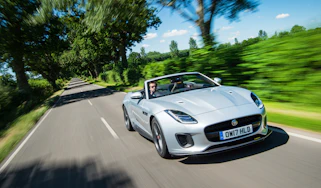
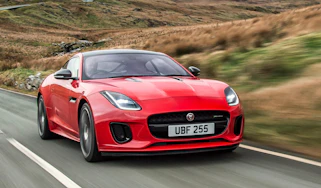
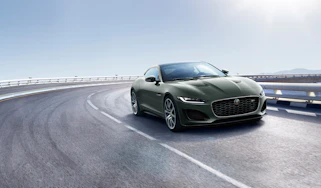
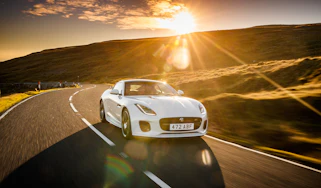
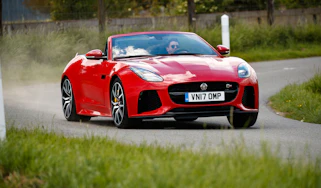
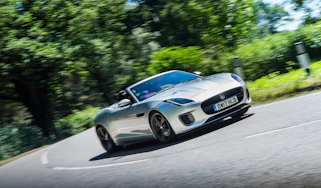
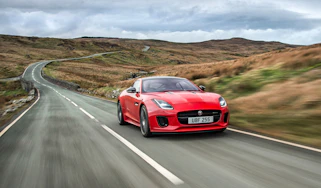
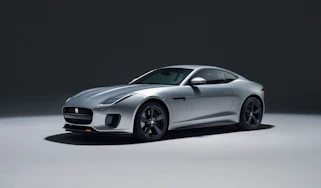
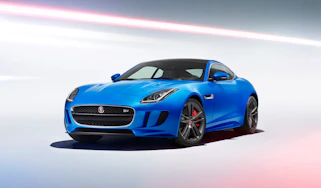
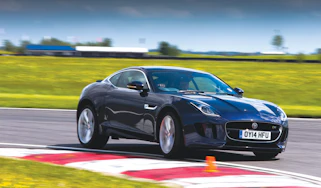
Seven years on, the F-type was given a major overhaul with fresh styling, a realigned engine range and improved tech. What didn’t change was the F-type’s distinctive style. Despite the quite substantially different front end, its dramatic proportions and sleek lines remained true to the original. Even now it’s one of the most distinctive sports cars of the last two decades and Jaguar fans have been left pining for it, as they await the Type 01 and Jaguar’s new electric era.
Engines, gearbox and performance
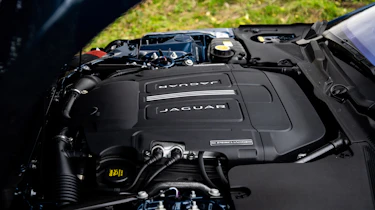
- Four-cylinder, V6 and V8s made up the range
- Top-level F-type R got the SVR V8
- Annoying gearshift thumps mapped in for the facelift
The biggest change to the range was the loss of the old car’s supercharged V6 engine, instead the new F-type is available in a single four-cylinder turbocharged petrol variant or with a choice of two supercharged V8s. The previous range-topping SVR model is also dead, but the standard F-type R has picked up its full-strength 567bhp V8 to compensate.
More reviews
In-depth reviews
Reviews
- Jaguar Project 7 (2015 - 2016) review – the peak of Jaguar's outgoing era?
- Used Jaguar F-Type (2013 - 2024) review and buyer’s guide
- Lister Thunder review – is 666bhp too much?
- Jaguar F-type 400 Sport review - sharper V6 nibbles at F-type R's heels
- 2017 Jaguar F-type SVR review – small tweaks to the top-of-the-range F-type
- Jaguar F-Type SVR Convertible review - a 567bhp assault on the senses
The basic P300 has the same Ingenium four-cylinder petrol engine as was found across the JLR range, producing 297bhp, with a peak 295lb ft of torque available from just 1500rpm. P450 and P575 models each use the AJ-V8 Gen 3 5-litre supercharged V8, seen consistently within the JLR range since the original XF-R and still available in the Defender. The P450 was a new 444bhp output that was the lowest figure in any V8 F-type. The V8’s torque figure is still a generous 428lb ft between 2500-4500rpm, making it feel nicely understressed.
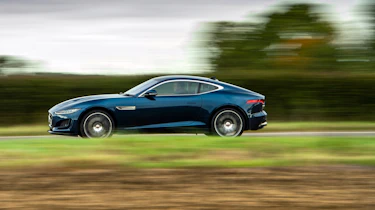
It’s the R’s 567bhp variant that makes all the noise though, both figuratively and literally, having ditched the previous R’s 542bhp version in favour of the unit last found in the old notoriously expensive SVR model. All second-generation F-types pair their engines with ZF’s eight-speed automatic transmission.
> Jaguar F-type (2013 - 2019) pre-facelift review
The P300’s engine is not a particularly performance oriented powertrain in other JLR models and it feels little different here, lacking the enthusiasm or flexibility of top-drawer sporting four-cylinder engines found in rivals from Alpine or AMG. It feels like the Ingenium four-pot is working quite hard to give you menial performance – 0-62mph taking 5.7sec – lacking the alacrity of other high-performance four-cylinder engines found in Mercedes-AMG A-Classes and VW Group hot hatches.
The issue isn't actually outright speed, though, rather the way the speed is delt, in having a similar lethargic response that is familiar from other JLR products that share this 296bhp-spec four-cylinder engine. Turbo lag can be an issue, but there also seems to be a hesitation to gain or drop revs, making the engine feel like it’s lubricated with golden syrup, rather than engine oil.
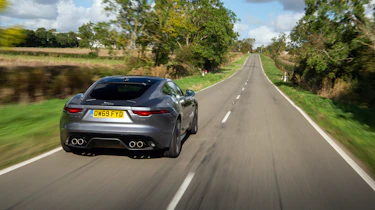
This is exacerbated by the short gear ratios that exaggerate the engine’s unresponsiveness, making the gearbox feel almost CVT-like as the engine only barely feels like it engages a gear properly before the next upshift. Flick it into manual mode and there is a more natural feel to its acceleration, but it still lacks the crisp throttle response we expect from four-cylinder engines found in most hot hatchbacks, let alone £55k sports cars.

Performance from the P450 reflects its laid-back nature, it doesn't actually feel that 'fast', but always feels under-stressed and relaxed – the torquey power delivery doubles down on this. P450s do the sprint to 62mph in a more leisurely 4.6sec compared to the R, regardless of whether power goes to two or four wheels.
In the R the 567bhp V8 is a joy. The howling, crackling 5-litre has long sounded a little contrived next to, say, the stock-car bellow of an AMG eight, but it’s massively potent. Furious standing-start acceleration (0-62mph in 3.5sec) and horizon-crunching mid-range are part and parcel, and the eight-speed auto, as in the others, is responsive enough to paddle flicks to make manual mode the default choice on a twisty road. That said, Jag’s fiddling with the software did introduce a frustrating thump to the changes at high rpms in Dynamic mode. Jaguar deemed it appropriate for a sports car, but ‘irritating’ is the first word that springs to mind when driving it.
Ride and handling
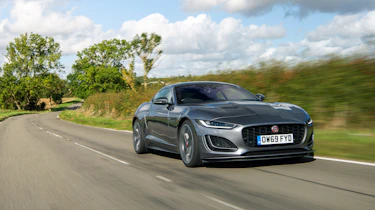
- F-type R got new springs and dampers
- P450 and R also received knuckle, bushing and bearing upgrades
- F-types are heavy beasts – P300 lightest at 1595kg, R over 1800kg
As well as its raised power figure, the R also picked up new springs and dampers, while both the R and its P450 sibling got stiffer rear knuckles, tighter bushings and uprated wheel bearings. All updated F-types have steering set-ups individually calibrated to their application, with different weighting and even steering ratios.
Otherwise, it’s as per the previous F-type, with double wishbones all round, electronically adjustable dampers and a kerb weight that’s curiously heavy for something with so much aluminium in its construction. At a quoted 1743kg, this is over 100kg more than a 911 Carrera 4S.
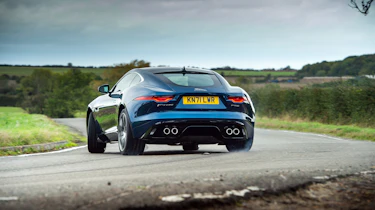
Overall it feels just a little more relaxed than before, as if Jaguar has tuned out some of the overly jumpy nature that could catch out the previous R. It’s still hyper-responsive to throttle inputs in Dynamic particularly, but even on damp roads it doesn’t seem to overwhelm the rear tyres quite as easily as it used to.

Just as the power delivery seems a little less hyperactive, so too does the chassis seem more in tune with your inputs. The new steering ratio is slightly more relaxed than before, and easier on the self-centring than some other recent Jags, including the P450. The benefits are numerous: better feedback, less muscle required on a twisty road, and less chance of unsettling the F-type’s bulk when you’re tipping it through a tricky turn.
Jaguar has been keen to give the car a rear-wheel-drive feel, and it’s worked – from the moment you turn in the car takes a poised stance, and from there you can get on the power and feel the car pushing you along rather than dragging from the front. There’s plenty of turn-in bite and good mid-corner grip, and while you can feel the weight moving around under braking or when you need to flick from one direction to another, the body is well controlled.
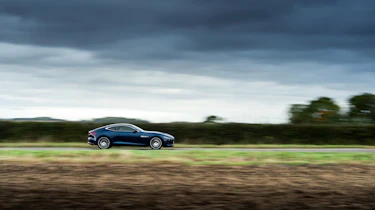
Throw in strong stoppers and a mature ride (not to mention a cabin that has enjoyed a few quality tweaks as well as improved infotainment, and revised styling that still turns heads) and the F-type continues to neatly bridge the gap between sports car and GT. And the fun factor, thanks to the balanced chassis and monstrous power output, is as present as ever.
The P300’s one key advantage over the V8 models is the more balanced chassis that allows the lighter body to flow with the road with increased sophistication and fluency.
Driver’s note
‘Jaguar’s engineers get another gold star for the steering, which has the heft you’d expect (and possibly desire) in this most powerful variant, but with more natural responses and less springiness than in the P450. This, as with the P300, means the R flows rather than darts into corners, and with the mode switch once more in Comfort rather than Dynamic, throttle response is again ideally judged for a progressive and particularly rapid four-wheel-driven exit from each turn.’ – Antony Ingram, evo contributor
MPG and running costs
- P300’s sub-30mpg rating is disappointing
- The V8s aren’t much worse at around 26mpg
- Big weight means regular and sizable tyre and brake bills
Fuel economy has never been an F-type strong point, and so it remains. The entry-level P300 is perhaps the most surprising, with a WLTP rating of between 29.2-29.9mpg. In our experience, it’s a figure that’s about right, sometimes dipping into the 30s under stress-free motorway runs. Push a little harder the MPG will drop, but not as dramatically as with more highly-strung engines.
The V8s are both rated at around 26mpg, but drive these with more aggression and the consumption will drop more aggressively than the P300’s. Oddly, on paper the least efficient of all F-types is the P450 AWD, which at 25.4mpg is a full 1mpg less efficient than the also all-wheel drive R, despite the latter’s 123bhp power advantage. Convertible models have as near as identical figures.
Consumables will be a considerable cost, due mostly to the high kerb weights on all models. P300 models tip the scales at 1595kg, rising all the way up to 1818kg for the R. Convertible models are only 20kg up on the Coupes.
Interior and tech
- Updated with a subtle touch – more the better
- Apple CarPlay and Android Auto add modern usability
- Quality didn’t feel £100k at the time, no issue now at used prices
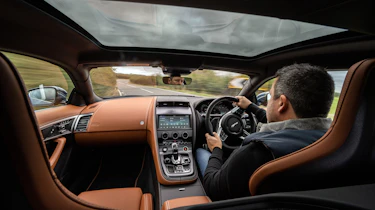
There’s an old adage that good design doesn’t date – this is something that rings true on the F-type. The interior, despite its considerable age, still looks and feels excellent. The chunky, substantial dash volume and high scuttle makes the F-type feel initially intimidating, but the seating position has plenty of adjustment to find the right balance between feeling encased, yet still being able to see out.
The asymmetrical dash layout is dominated by the passenger-side grab handle and joystick-like gear selector, both of which retain the authenticity of an interior driven by design, rather than technology. The F-type’s slick pop-up central air vents and simple, clear air-conditioning controls also remain.
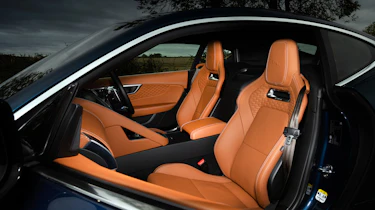
The downside to this dash architecture is that Jaguar's latest twin-screen infotainment system isn’t able to be integrated into the new model. The standard single-screen system works well enough though, especially if you’re the sort to use phone-mirror applications like Carplay or Android Auto.
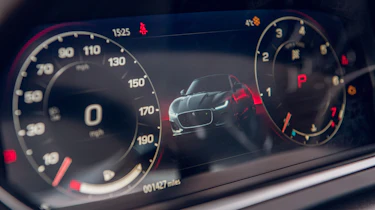
The new driver’s display is also an improvement on the previous model’s, with a slick high-resolution appearance and fresh graphics, although like other JLR models, this is hobbled somewhat by a slow screen refresh-rate. The stuttery rise and fall of the rev counter needle and speed readouts are an irritant.
Build quality on the whole is good and at a £50k price point felt excellent compared to rivals from Alpine and Toyota. At approaching triple figures it felt a little underwhelming though, especially when compared to a 992 911 or the superbly built Lexus LC500. Not such an issue at used prices, however.
Values and rivals
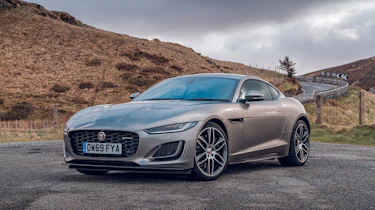
From new the updated Jaguar F-type R had something of an eyewatering price, at £97,280. Now, some time on from the F-type’s discontinuation, R prices start from a much more reasonable £55k on the used market. P300s can be had from £30,000 and P450s from £35,000.
It’s a bargain at these prices too. What can you have instead? Alpine A110s are on the lighter, slower side and even they’re no less than £30,000 for the earliest examples. Porsche 911s of a similar age (post-2020) start from £70,000 for a basic Carrera. Look to the more glamorous, Aston Martin-flavoured end of the spectrum and there’s no chance. Vantages of the same vintage are £70,000 minimum. A Lexus LC500 would be a fine choice, though delivers P450 performance for R money. Likewise a Mercedes-AMG GT, with even the amazing AMG GT-R within shot of £70,000 – a very special car for the money.
Prospective F-type buyers would do well to look out for how worn the large tyres and brakes of the big Jag are. Likewise that it’s been serviced properly, has good MOT history and is showing no signs of accident damage.
| F-type P300 | F-type P450 | F-type R | |
|---|---|---|---|
| Engine | In-line 4-cyl, 1997cc, turbo | Engine V8, 5000cc, supercharger | Engine V8, 5000cc, supercharger |
| Power | 296 bhp @ 5500 rpm | 444bhp @ 6000rpm | 567bhp @ 6500rpm |
| Torque | 295 lb ft @ 1500-4500 rpm | 428lb ft @2500-5000rpm | 516lb ft @ 3500-5000rpm |
| Weight | 1520 kg (195bhp/ton) | 1718-1790kg (RWD and AWD) (256bhp/ton) | Weight 1813kg (312bhp/ton) |
| 0-62 mph | 5.7sec | 4.6sec | 3.5sec |
| Top speed | 155mph | 177mph | 186mph |
| Price new | £55,000 | c£70,000 | c£100,000 |
| Value now | From £30,000 | From £35,000 | From £55,000 |