Lamborghini Urus SE review – Italy’s answer to the Aston Martin DBX S
The Urus matches Lamborghini’s low-slung Temererio and Revuelto with hybrid power, and executes it with much more sophistication than the looks suggest
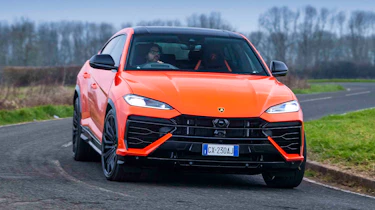
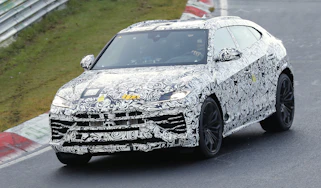
The Lamborghini Urus has a certain image among those in the know, and it certainly hasn’t improved with time. The Urus has been on sale for not far off a decade now and in that time, it’s only seen one major overhaul, the introduction of the plug-in hybrid SE. Today this version remains as the sole ‘entry-level’ offering beneath the new Performante and while its electrified powertrain offers more flexibility, there’s still the big question: is it a true Lamborghini?
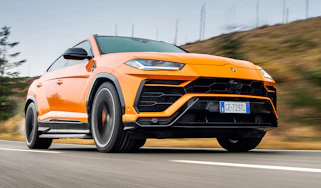
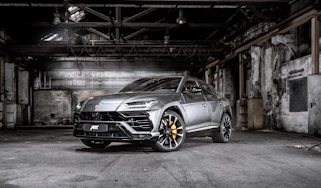
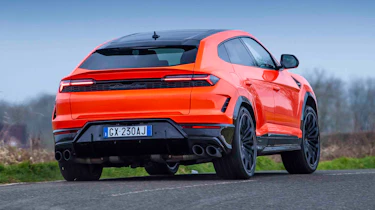
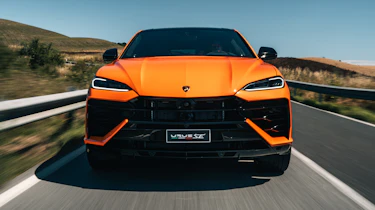
As far as its design is concerned, there’s a lot to suggest it is. Various manufacturers have since borrowed different design elements from the Urus to apply to much less desirable models, which can only be a compliment. Whether you’re a fan of its looks or not, it has purpose in abundance, but we’ve spent some time living with the Urus SE to find out if that extends to the way it drives.
> Aston Martin DBX S review – beating Ferrari's Purosangue to the top of the class
Engine, gearbox and technical highlights
- Volkswagen Group 4-litre twin-turbocharged V8, plus hybrid assist
- Platform shares with Audi RS Q8 and Porsche Cayenne
- Air suspension, adaptive dampers, active anti-roll bars and four-wheel steering
Despite the badge on the bonnet, the Urus shares its underpinnings with the Audi RS Q8 and Porsche Cayenne, borrowing the plug-in hybrid 4-litre twin-turbocharged V8 from the likes of Porsche’s Cayenne Turbo E-Hybrid and the Bentley Continental GT – the transmission is an eight-speed torque converter. At its launch, Lamborghini’s chief technical officer Rouven Mohr insisted the firm never considered a downsized hybrid and that a chunky eight-cylinder heart is essential to the Urus experience. Different engine mounts to Bentley and Porsche are designed to preserve a bit of NVH to boost involvement. ‘We are not looking to eliminate every piece of feedback from the car,’ says Mohr. ‘It must retain an emotional connection.’
More reviews
Output is just as strong as you’d expect. While the 801bhp Performante sits above it, 789bhp from the standard SE’s powertrain is certainly more than enough – in fact, it’s 132bhp more than the ‘old’ Performante. This comes courtesy of 612bhp from the V8 and 189bhp from the motor, itself fed by a 25.9kWh battery pack. The 0-62mph sprint is punchy at 3.4sec, just a tenth behind the Performante, with top speed coming at 194mph.
Lifting the dramatic red button guard to thumb the start/stop button is all very Lamborghini… until the SE ‘starts’ in EV mode by default. A flick of the huge central powertrain mode selector brings the V8 into play with a bark, though, which is something you’ll find yourself doing quite frequently – the selector only clicks in one direction, which means to return to the start of the list you have to click multiple times to get there. There are an overwhelming number of powertrain and driving mode configurations to choose from and while most make a noticeable difference to the way it drives, there is a small learning curve before you find your preferred setup.
Suspension is by height-adjustable air springs with adaptive dampers, with active anti-roll bars and four-wheel steering to help disguise the SE’s considerable mass. The setup of the hardware changes depending on the drive mode – the left ‘tamburo’ trigger sequentially cycles through three tarmac and three off-road settings, while three buttons on the right of the gear selector provide access to performance, recharge and hybrid modes for the powertrain. Electric mode is accessed by pulling a dedicated switch.
Driver's note
‘Driving a Urus silently around town in EV mode feels bizarre, and completely at odds with what is otherwise one of the most brash, look-at-me SUVs out there. But I like having the option to tone things down, and the engine is still the rumbling heart of the car when you wake it up.’ – Yousuf Ashraf, evo senior staff writer, who tested the Lamborghini Urus SE on the road in the UK
Performance, ride and handling
- Useable electric range and surprising economy in hybrid
- Powertrain modes offer huge breadth in ability
- Air suspension offers reasonable ride for everyday usability
Notch the car into Strada mode and the Urus works mostly as a hybrid, albeit keener to involve the engine than most at a refined and classy level. It will likely become your default for longer journeys and everyday drives, with calibration excellent for smooth, ordinary driving – it makes sensible use of all-electric drive below 40mph to conserve battery, bringing the engine into play at higher speeds. For shorter trips you can lean into the SE’s 37-mile range in EV mode, which can be used up to 84mph. In truth it feels wasteful to cruise at such speeds without the V8, which has always been core to the Urus experience – you’ll soon deplete the battery without the V8 in play, too. A 200-mile motorway run in hybrid mode saw the Urus SE return 32mpg, which is nothing to be sniffed at for an 800bhp super SUV.
Switch out of electric and into one of the more aggressive modes and the engine fires, filling the void immediately with a bassy growl. A bit like a (very) watered down version of a Le Mans Hypercar crawling out of the pits. Straight away there’s a sense of huge flexibility from the powertrain, the e-motor covering for the engine before the twin turbos hit their stride and providing instant response, without operating like a separate entity to the V8. The hand-off from electric drive to pure-combustion can occasionally be felt in a dip in power at full-throttle, but you’re unlikely to want much more power regardless.
Sound is rich and theatrical, with cracks and pops from the exhaust when equipped with the optional Akrapovic system, and a borderline obnoxious idle in Corsa mode. Stretch it through the mid-range and the off beat V8 rumble turns into a slightly synthetic sounding blare, but you’re whipped along at such a rate you might not notice. It’s a fiercely accelerative SUV, never feeling as mighty as nearly 800bhp would suggest due to the weight, but more brutal than Porsche’s quickest Cayenne, which already melts your mind.
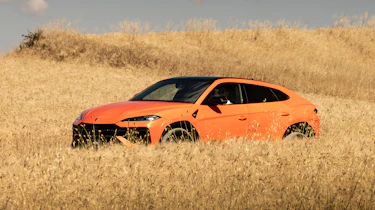
On the stonking 23-inch alloys of this test car, the ride is busy whatever drive mode you choose, though it gains compliance and a more confident stride on a motorway cruise. Pirelli has developed a bespoke P Zero compound across the range but says its character shifts in an upward sliding scale from comfort to commitment, and we suspect the softer focus of the 21s or 22s will be more welcome if this is an everyday proposition – as the Urus typically is for many of those loyal customers. As it stands the Urus is certainly livable, just not able to waft like a Range Rover Sport SV. It’s closer to the tighter, more connected feel of a GT Package-equipped Cayenne.
Click through the gears via the tactile paddles and you soon pick up plenty of pace, which is when you get a sense that the chassis is working hard to keep its mass in check on a trickier B-road. It feels big too, but the raft of chassis systems do sharpen the responses enough to not make it feel as extremely overweight as it is, merely very heavy. The steering is direct and firmly weighted, and the rear-wheel steering intervenes to usefully tighten your line in slower turns. Under hard acceleration and braking you do feel the mass pitching around – those active roll bars help mitigate lateral roll but longitudinal movements are resisted primarily by the springs and dampers.
It’s far from a deft, delicate car then, but the SE does have some impressive tricks up its sleeve when you find the right road – preferably a smoothly surfaced one with plenty of space to play with. The way it digs in, forces its mass to pivot into corners and rips from point to point is undeniably impressive. In Corsa mode the Urus is at its most neutral in the pursuit of track performance, but Sport brings out more fun and adjustability from the chassis. The 4WD system is reactive to your inputs, and learning the mindset of its software can yield cartoonish results. Under hard throttle the nose unloads and creeps wide, but stay committed with the steering cranked and the balance shifts the other way, the SE readily pitching into slides. It can be quite brutal when it moves around, the tyres straining and chirping under the stress of the cornering forces and all that weight, but it’s entertaining in an obscene kind of way. A twitch of torque steer at full-throttle is also a common occurrence, which can be a little disconcerting if you’re on a tight B-road.
The regen braking is adjustable to the driving mode, temperatures and battery charge level – but all via the car’s own brain rather than the driver’s fingers. Mostly, it all slips away into the background. Much like a Ferrari 296 GTB, it feels like the inevitable march to electrification has been woven into the car’s character as much as possible rather than reluctantly lumped on top. ‘You could do a purer internal combustion version but you’d lose a lot of the benefits,’ says Mohr. ‘Our new 4WD concept transforms the Urus. Put this car on Trofeo Rs and it’d be quicker than the old Performante.’
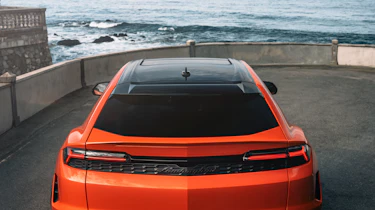
There are compromises – chiefly the extra weight that negates some of the SE’s power advantage and is perhaps responsible for the unsettled ride – but by and large, the SE has a broad repertoire, and fans of the outgoing model will find plenty to like.
The added weight of the hybrid powertrain is notable, tipping the Urus past the 2.5-tonne mark for the first time. Lamborghini has seized an opportunity to overhaul the Urus’ dynamic character, the e-motor running through the eight-speed gearbox to have its power distributed via a central differential and rear e-LSD; the full combined totals of 789bhp and 700lb ft are spread variably fore and aft and then controlled laterally on the back axle. The car is always 4WD in regular use, though more extreme inputs can send every mite of power to the rear. ‘Hardware is still important, it’s the enabler to what you can now achieve with software,’ insists Mohr. ‘Companies that forget its importance will suffer.’
Driver’s note
‘In Sport, it doesn’t take much provocation for the rear axle to play a lead role out of roundabouts and tighter corners. Nothing too antisocial, just a giddy, up on its toes sensation that – given the space to play – will goad you on to drive harder to unlock more of its dynamism. Four-wheel steering and active anti-roll bars do their bit to chip away at the sensation of mass and its c300kg climb over the old Urus S does metaphorically shrink, at least a little.’ – Stephen Dobie, evo contributor, who tested the Lamborghini Urus SE on the launch in Italy.
Interior and tech
- Angular styling draws plenty of attention
- Updated cabin features snappy infotainment system
- Excellent sound system courtesy of Bang and Olufsen
The SE’s cabin will be familiar to previous Urus owners, with a near vertical slab of dashboard ahead dressed with typical Lambo cues, such as angular trim, trapezoidal air vents and in our test car, a mix of orange leather accents and carbonfibre. The fundamental layout (and some of the switchgear) is borrowed from the Audi RS Q8, which comes as no surprise given the two share a platform. But the design is different enough to make the Urus feel like a unique, more special product.
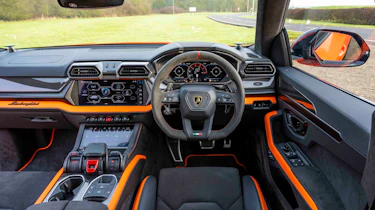
The bank of airplane-style selectors on the centre console look cool but are confusing to use. The central gear selector is only used to engage reverse, for example, with park and manual mode being activated by separate buttons, and drive being engaged by pulling the right hand paddle on the wheel. Just one lever would do, but perhaps this is one way to inject an added element of theatre.
Materials and build quality are strong for the most part though, with touch points such as the shift paddles behind the wheel and buttons on the steering wheel all very tactile and nice to use. The Bang and Olufsen speakers (which rise from the dash on startup) are excellent, but a little too punchy for their own good – our test car developed a persistent rattle in the driver’s door card at certain frequencies. The Urus-specific fuel filler cap is also a nice idea, but the use of low resolution 3D printing for its construction feels a little amateur at this level.
This is not a small car, but the fitment of that huge high voltage battery in the boot means you lose some storage capacity in the process. This is one of the more disappointing elements of the Urus SE as it makes it really does make it less useable day-to-day, with few areas in which to store items and have them stay in place during the inevitable high lateral acceleration you’ll encounter – the charging cable would usually live neatly beneath the boot floor, but there is no such storage compartment here.
Price, specs and rivals
The Lamborghini Urus SE is priced from £214,000, which is a lot. It’s around £20,000 less than its Performante relative though, and right in-line with the less potent 717bhp Aston Martin DBX S at £210,000. It’s also significantly less pricey than the Ferrari Purosague, with that car coming at a premium of well over £100,000.
Britain’s alternative in the DBX S is an excellent driver’s SUV, if that’s what you’re looking for. It’s a pure-combustion offering with dynamics not far from a super saloon, and while its looks are a little extreme next to Gaydon’s more conventional offerings, it will be a much more palatable prospect for some.
The likes of the Range Rover Sport SV and Mercedes-AMG G63 will save you some cash at £146,195 and £190,975 respectively, but Porsche’s Cayenne Coupe Turbo E-Hybrid is the driver’s choice of the bunch when equipped with the GT Package, sharing hardware with the Urus but at a much lower £147,460 asking price.
Lamborghini Urus SE specs
| Engine | V8, 3996cc, turbocharged, plus single e-motor |
| Power | 789bhp |
| Torque | 700lb ft |
| Weight | 2505kg |
| Tyres | Pirelli P Zero (bespoke compound, 285/35 23 front, 325/30 23 as tested) |
| Power-to-weight | 320bhp/ton |
| 0-62mph | 3.4sec |
| Top speed | 194mph |
| Price | £214,000 |